The big impact of small stressors: Tips to feel less drained
Learn how microstress silently impacts your life and ways to prevent feeling overwhelmed


In the fast-paced world we live in, stress is an all-too-familiar companion. Many of us have developed coping mechanisms for big stressors – things like work pressures, family commitments, or unexpected challenges that require immediate attention.
But what about the little things? The traffic that makes you late for an appointment. Your partner forgetting to put the bins out after being asked multiple times. Annoying scam calls that come at the worst times.
These small, seemingly insignificant irritations throughout the day are microstressors, and while they may not seem like much, collectively they can leave you feeling drained, anxious, and overwhelmed.
NOT SO TRIVIAL
You may not have heard the term before, but you’ve no doubt experienced it. Originally coined by US researchers Rob Cross and Karen Dillon, microstressors can be so subtle we barely notice them, yet they chip away at our energy and mental resilience.
“These moments of stress are so brief that our brains barely register that it happened, but our bodies do,” explains Dillon, co-author of The Microstress Effect. “Our bodies respond to microstress in the same way they respond to bigger forms of stress.
“A key difference is our body doesn’t invoke its fight or flight mechanism, yet we still experience the other physiological symptoms of stress such as increased heart rate, hastened breathing, and elevated cortisol levels.”
Unlike major stressors such as caring for an ill relative or mounting debt, microstressors often seem trivial, which makes them easy to brush off. However, over time, their cumulative impact can become substantial.
“We know how to talk about big stressors and seek help, but microstress feels so small and insignificant that we don’t even have the language to describe it, never mind asking for help or solutions to it.”
Think of microstress as tiny drops of water filling a glass. One or two drops won’t make a difference, but if you continue to add more, eventually the glass will overflow.
If microstressors are not addressed, they pile up and can lead to burnout, fatigue, and irritability.
SPOTTING THE SMALL STUFF
The tricky part about microstress is that it often flies under the radar. It tends to be quick and fleeting, leaving us little time to process or even realise we’re feeling stressed.
However, once you notice them, it’s easier to see patterns and address them, says Sheena Schuy, a therapist and business mentor specialising in burnout and anxiety.
COMMON EXAMPLES OF MICROSTRESSORS
- Constant interruptions Ever notice how frustrating it is when you’re trying to concentrate on a task and someone keeps interrupting you? Whether it’s someone at work, a phone notification, or your kid asking a quick question when you’re in the middle of something, these small disruptions can leave you feeling scattered and unfocused.
- Minor disagreements Not every argument is a major blowup. Sometimes, slight tension in a conversation or a disagreement that’s left unresolved can weigh on your mind throughout the day.
- Time pressures Ever find yourself rushing to finish a task and feeling like you’re constantly racing against the clock? Micro-moments of time pressure, especially when they happen repeatedly, can elevate stress levels.
- Decision fatigue From choosing what to wear in the morning to deciding what to cook for dinner, the number of small decisions we make every day can become exhausting. Over time, this decision fatigue can lead to feelings of mental overload.
- Vague expectations Being given a task without clear instructions or guidance can leave you feeling uncertain about how to proceed. This uncertainty adds to your mental load as you try to figure out what’s expected.
- Microstressors can also come from our relationships Sometimes, the people we love and interact with on a daily basis, unintentionally cause stress through well-meaning but overbearing behaviours, or when your expectations (about things such as emotional availability or responsiveness) are not aligned. Little things – like a text that feels passive-aggressive or a backhanded, hurtful comment – can build up and leave us feeling on edge, Schuy explains. “Unlike tasks on a to-do list, relationships are emotionally charged, making it harder to detach. When someone we care about is unintentionally dismissive or demanding, it stings because of our emotional investment. There’s often also an unspoken expectation to tolerate it because we love the person involved.”
WHEN MICRO BECOMES MACRO
There are key signs to look out for, says Australian trauma specialist and psychotherapist Diane Young. “Stress and anxiety can show up in our bodies and our emotions in a variety of ways. Physically, the symptoms may vary, and they may not happen all at once.”
- Changes in mood Difficulty concentrating, irritability, mood swings, and persistent brain fog can all be signs that you’re reaching your limit, as can racing thoughts, excessive worry, and overthinking. Be aware if you become frustrated and irritable when normally you would be calmer and measured in your approach.
- Inflammation Your joints and muscles may become inflamed, and you may experience muscle tightness and unusual aches and pains. You may also be diagnosed with high cholesterol or high blood pressure, which can increase the risk of a heart attack or stroke.
- Gut issues Indigestion, bloating, pain, and discomfort in your gut can be signs you’re feeling stressed. Diarrhoea and constipation can be indicators too.
- Frequent illness Stress affects your immune system, and with decreased immune function comes a higher risk of becoming ill. It also takes longer to recover from those illnesses.
However, once you notice them, it’s easier to see patterns and address them, says Sheena Schuy, a therapist and business mentor specialising in burnout and anxiety.
SUPPLEMENT HELP
If you’re starting to experience the symptoms mentioned above, it’s definitely time to cut out some microstressors. Find a quiet room to work in, switch off distractions, and work on clear communication.
You can also support your body physically with supplements.
VITAFORCE RECOMMENDS
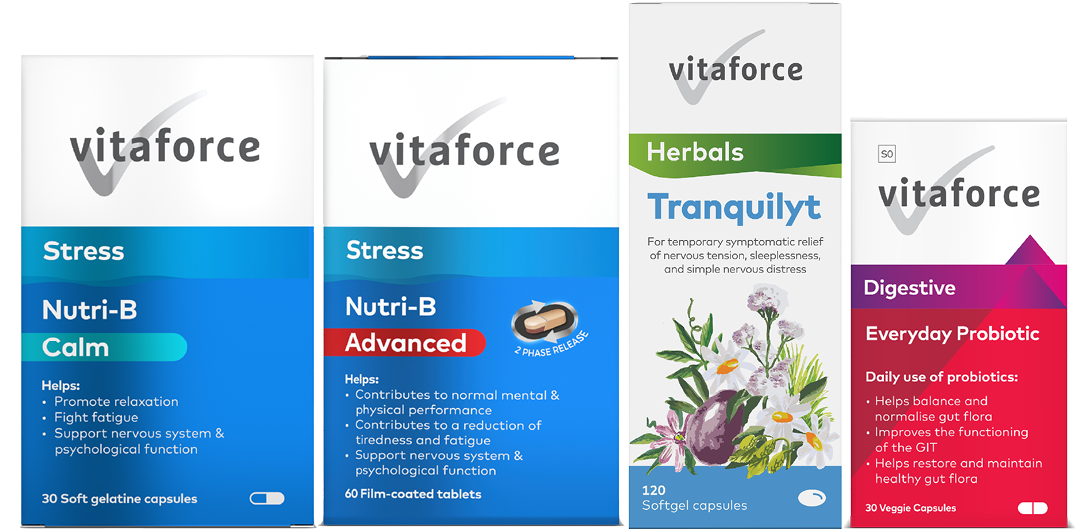
• Nutri-B Calm and Nutri-B Advanced for enhanced mental focus and to fight stress and fatigue.
• Vitaforce Tranquilyt is a homeopathic herbal remedy to relieve nervous tension, sleeplessness, and nervous distress.
• The Vitaforce Everyday Probiotic can help with balancing and normalising gut flora to deal with bloating, indigestion, and constipation.

 Built with Shorthand