
Supplements for ageing skin: What works, what doesn’t, and why lifestyle wins
Supplements may help achieve glowing skin and better health, but a healthy lifestyle is essential to back them up; here’s what you need to know.

With the increasing popularity of social media and online wellness groups, we are constantly exposed to unverified new diets, fitness trends, health secrets, and some pretty bizarre wellness hacks.
Despite what trends and tools come and go, supplements endure. These dietary sidekicks have been around for decades, marketed as the ultimate solution to fill nutritional gaps in a fast-paced world that often leaves little room (or budget) for balanced meals and regular workouts.
Though many experts argue that supplements might be redundant with the proper diet and habits, today’s economic and time constraints force some of us to look for a helping hand, and that’s where supplements step in. For instance, calcium and vitamin D can help build strong bones, while fibre supports a healthy digestive system.
Supplements are available without a prescription and usually come in pill, powder, or liquid form. Common supplements include vitamins, minerals, and herbal products, also known as botanicals.
While not everyone needs them, supplements can become more beneficial as we age. Our bodies face increasing challenges in combating the heightened risk of non-communicable diseases like diabetes, hypertension, and chronic obstructive pulmonary disease (COPD).
Around the age of 40, the ageing process tends to accelerate, and factors such as environmental stress, unhealthy diets, excessive alcohol use, smoking, lack of physical activity, and elevated stress levels further amplify the risk of developing these conditions.
Additionally, our skin undergoes various changes due to biological and environmental factors. These changes include decreased collagen and elastin production, resulting in thinner, less elastic, and more fragile skin. This can lead to wrinkles, sagging, and a greater susceptibility to bruising. Our skin may also become drier, and slower to heal.
According to Toni Carroll, a self-proclaimed ‘supplement sommelier’, supplementation goes beyond the surface and can be the secret to healthy, glowing skin when used correctly and complemented with a good diet.
“Most topical products (unless highly specialised or medical-grade) don’t penetrate beyond the epidermis, so it’s vital to adopt a holistic approach to skin health, which includes nourishing the skin cells through all the layers.”
Carroll, who founded the luxury nutricosmetic brand My Beauty Luv, echoes the beliefs of many in the health space: “Targeted supplements and skin-loving, wholesome food work to nourish from within,” she asserts.
As with any skincare product, the ingredients are key, says Carroll, who warns people against falling prey to social media fads and trends in supplement ingredients.
“I’ve seen many ingredients become the latest fad or ‘trending’, only to fall by the wayside when the next popular one takes the spotlight,” she says, adding: “I prefer to follow science and good old common sense rather than TikTok.”
According to Carroll, any fruit or vegetable high in antioxidants extracted using precision methods would benefit healing and nourish the skin from the inside out.
“Think rosehip, pomegranate, blueberries, and grape skins. Also, look for skin-loving minerals, especially the form they come in, such as chelates of zinc, copper, selenium, and silica. People often think that simply taking collagen is enough. Unfortunately, collagen is a simple foundation supplement – it’s not a miracle cure-all,” she says.
When managing chronic skin conditions, Caroll shares that certain medical-grade supplements are highly beneficial, but they can only “supplement” other medical interventions.
She explains, “They need to work in tandem with those medical treatments and the correct topical protocols that an expert would advise on. Chronic disorders are almost always a reflection of a person’s lifestyle choices or hormonal imbalances.”
Her golden rule for clients? “There is no miracle supplement. If your lifestyle choices are poor, your stress levels are through the roof, and you treat your body like garbage, then you can’t blame a supplement for not miraculously giving you gorgeous skin.”
If you’ve spoken to your doctor and decided supplements may be the route to go, and you know that a good diet and exercise are prerequisites, when will you start seeing results after taking supplements for skincare?
“This depends entirely on the individual’s physiology, genetics, and lifestyle. But generally, a good rule of thumb is three months for skin improvements,” shares Caroll.
VITAFORCE RECOMMENDS
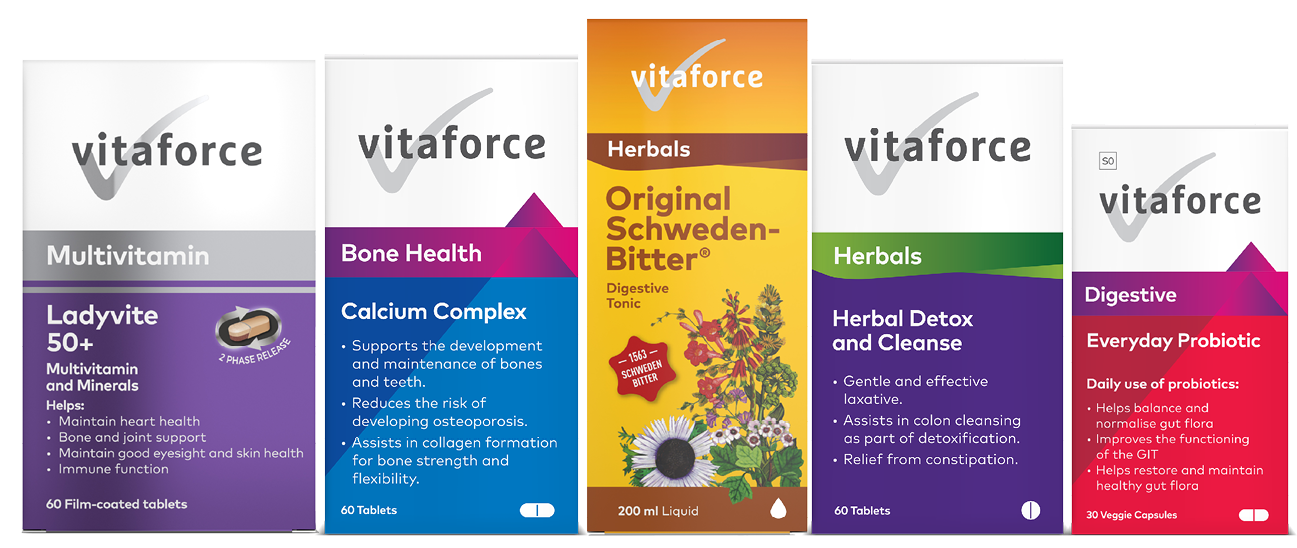
1. Vitaforce Ladyvite 50+ – A daily supplement that contains powerful antioxidants to promote optimal health by maintaining the health of the heart, eyesight, skin, bones, and joints.
2. Vitaforce Calcium Complex – develops and maintains strong bones and teeth and can reduce the risk of developing osteoporosis while assisting in collagen formation for bone strength and flexibility.
3. Vitaforce Original Schweden-Bitter – It’s been around for hundreds of years. It’s a digestive tonic containing over 20 different herbs and aids in the elimination of the body’s waste products and toxins, and can give systemic relief from bloating, indigestion, gut discomfort, constipation, and nausea.
4. Vitaforce Everyday Probiotic – Helps to balance and normalise gut flora and improves the functioning of the gastrointestinal tract.
5. Vitaforce Herbal Detox and Cleanse – A gentle, effective natural laxative which aids in colon cleansing as part of detoxification and offers relief from constipation.

 Built with Shorthand